

2014–2017: Building the tool professionals didn’t expect they needed
The first users understood it immediately, but everyone else needed to see it in action.
One tutorial at a time
The social media community moved fast — swapping presets, posting before-and-afters, helping each other in the comments. But outside that circle, most photographers had never seen a color grid. Sliders were the default. That was all they knew.
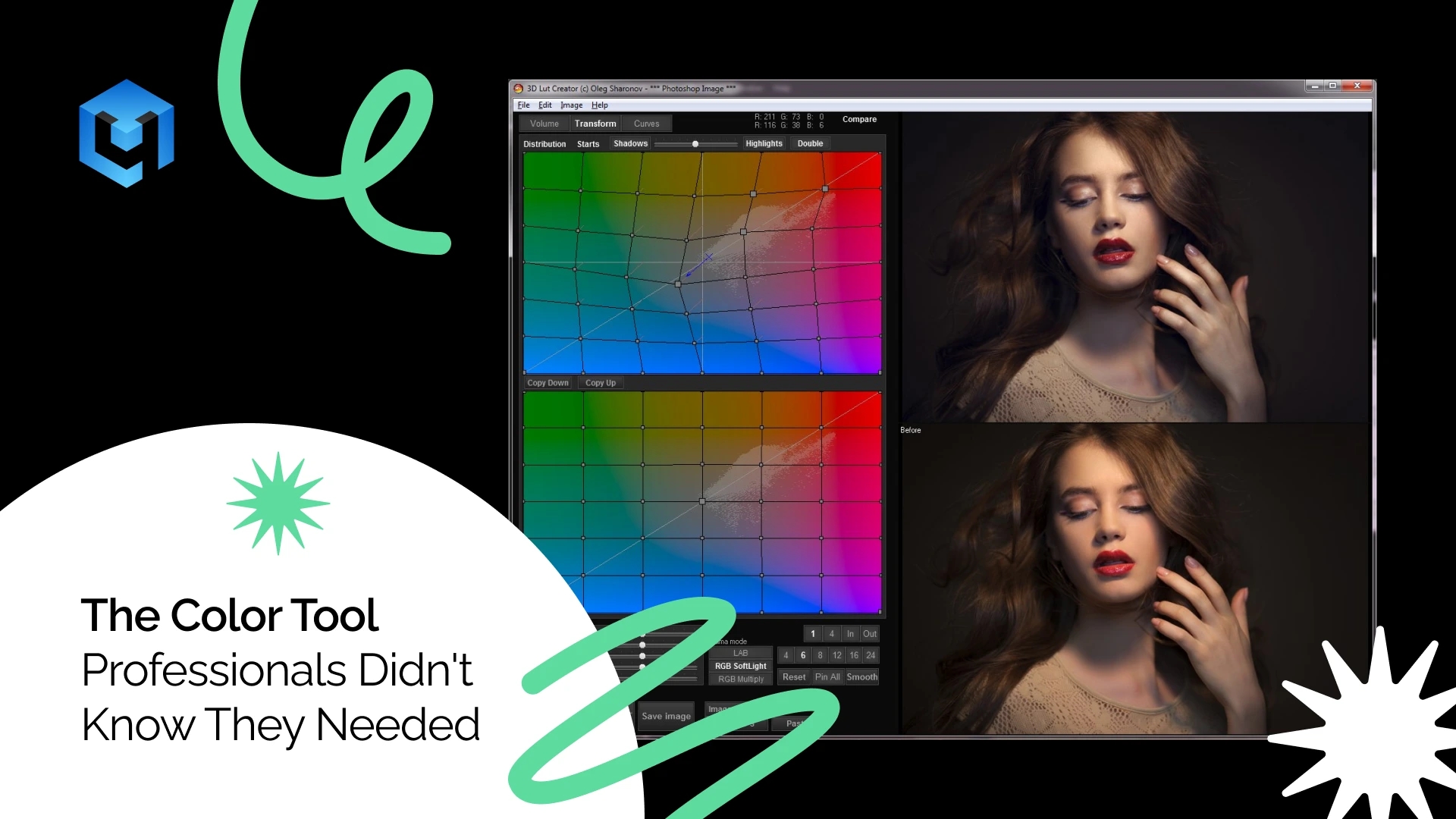
Oleg’s response was to show, not tell. He made video tutorials — precise, technical, walking through exactly what the grid could do and why it worked the way it did. The community grew. Then it started attracting a different kind of user: professional colorists, video editors, people with real production pipelines who needed a reliable color tool.
The ability to export LUTs meant 3D LUT Creator could fit anywhere — DaVinci Resolve, Premiere Pro, After Effects, Final Cut, Lightroom. You did the creative work, exported the file, and dropped it wherever your project required. What had started as a weekend experiment was appearing in professional pipelines around the world.
When reviewers weighed in, the verdict was consistent. Larry Jordan, writing for video editors, called it simply: “absolute color magic.”

The photographer in the room
By this point, Oleg wasn’t working alone. Vitaly Glebochkin had joined as co-founder — and took on what the growing software company genuinely needed. He managed the website and led user education, helping photographers who had never seen a color grid actually learn to use it. Like Oleg, he was an active professional photographer himself, which meant he knew which problems mattered and which ones only seemed to. That instinct shaped how the tool developed from the inside.
The guiding principle between them was simple: make something genuinely better, then make it work everywhere.
It held for the color problem. But every shoot they finished pointed at the same unresolved frustration — the hours of manual retouching that followed. No tool handled it well back then. And Oleg was starting to think that fixing it might require learning something completely new.